Our community solutions team works hard to treat everyone in the community like a neighbor—but this time it’s really neighbors helping neighbors.
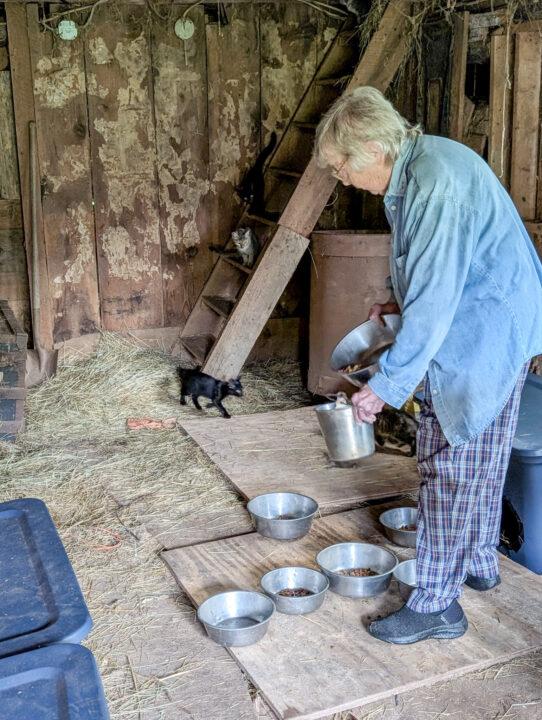
Phyllis called our helpline on behalf of her neighbor, Barbara, a tough-as-nails elderly woman who lives by herself…that is, if you don’t count her dog and the colony of cats in her barn. When she moved there in 1985, there were already cats on the land. She’s managed the property on her own for decades, but in recent years the cat population grew far beyond what she can handle. She’s going through over 20 lbs of food each week.
“She’s 87 years old, and financially it’s a drain. She buys all the food,” Phyllis said. “They just kept multiplying and multiplying, so I said, ‘We’ve got to do something about this.’ I just started calling everybody and one day I got lucky: I got y’all.”
When she described the situation and property, Connie, our Community Sheltering Center manager, realized it was just down the street from her own home.
“We were about to close so I said, ‘You know what? You’re on my way home, I can just stop by and chit-chat,” Connie said. “Turns out I had met Phyllis before. She led me down to Barbara’s and that’s when I saw the cats.”
Together, they began to work up a game plan for managing the colony, which we estimate to be a whopping 40 community cats.
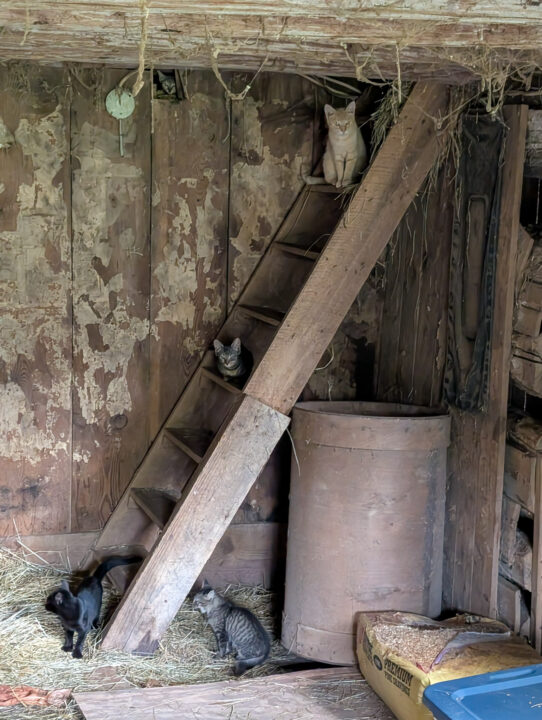 Community cats are unowned cats living outdoors, often relying on human areas for food but generally avoiding close contact. The best way to manage the population is via Trap-Neuter-Return (TNR) programs which sterilize, vaccinate, ear-tip, and return them to their homes.
While community cats tend to be unsocial with people, Barbara’s colony has come to rely on her. The main tomcat, nicknamed Mr. Fuzzy Tail, and some of the braver kittens greet her at feeding time.
“Once a cat is past its socialization period, it’s highly unlikely that it will be happy in a domestic setting. They’re virtually wild animals at this point,” Connie said. “If you pluck them out of their territory it just creates a vacuum. The only tried and true method once you are at this stage is TNR.”
To stop exponential growth and create stability, a colony needs about 75% of its cats TNR’d. We’re halfway there, thanks to our team, Phyllis, and Barbara. The process involves patient trapping on site—though “patient” might be overstating it, as the colony’s healthy curiosity has them triggering traps almost instantly. (Our only reluctant catch was a very disgruntled opossum, promptly released.)
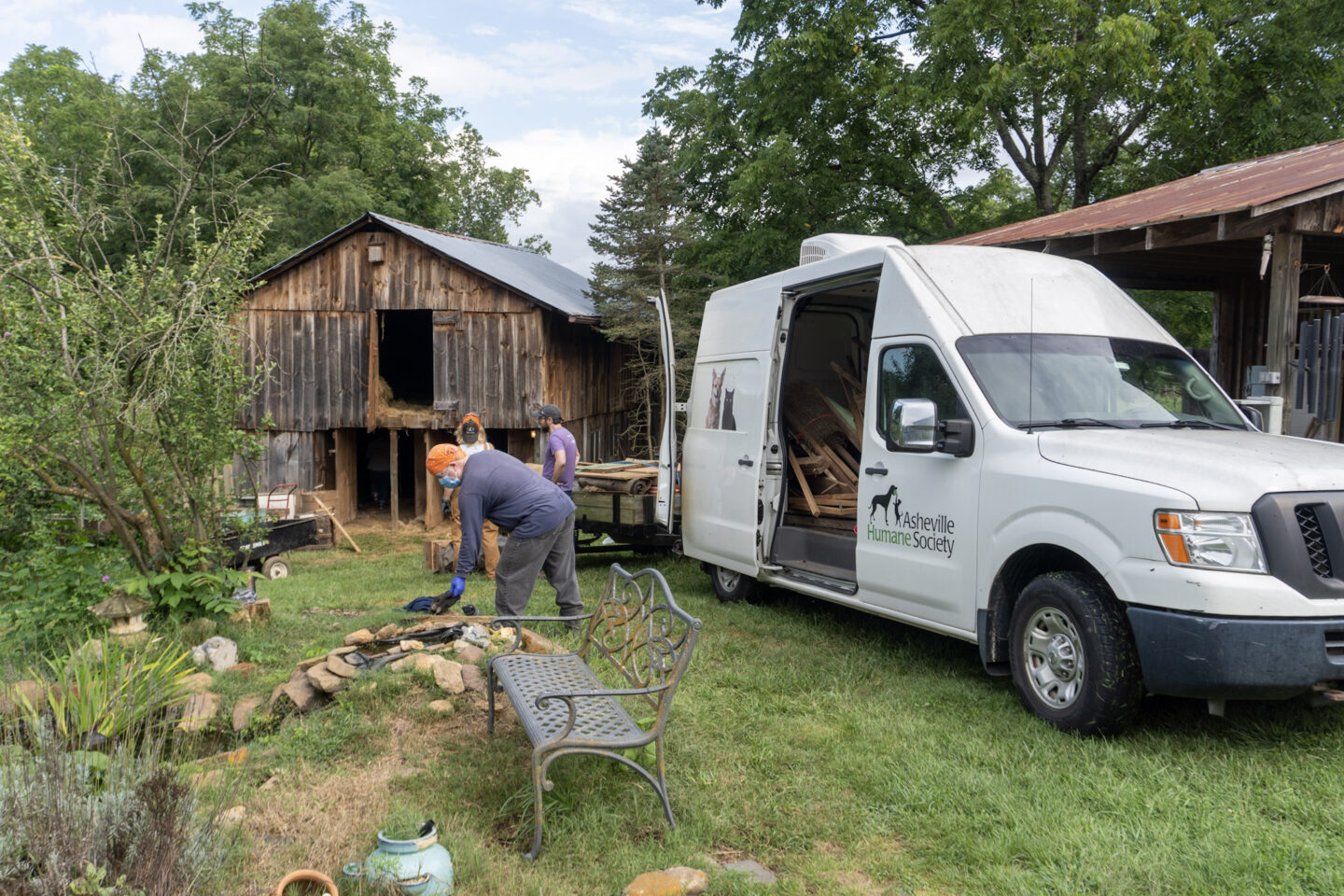
When we brought the cats for treatment, we noticed abrasions on their paws, likely from the metal scraps and other potentially harmful materials in the barn. Wanting to improve conditions for both the cats and their caretaker, our staff and volunteers rallied to clean out the two-stall barn.
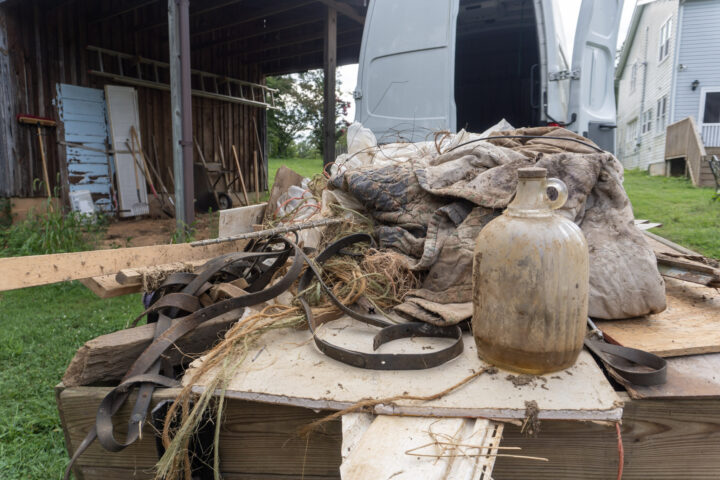
We found the classics: farm tools, equipment, wheelbarrows. And then things got interesting.
- The historical: Antique chests holding 1927 yearbooks and Nixon-era newspapers.
- The practical: Light fixtures, glass power line insulators, cleaning supplies, and horse tack.
- And the circle of life: Evidence of past residents, both…productive and permanently retired.
After a long, adventurous day, the barn was spick-and-span. To top it all off, we converted plastic tubs into insulated cat shelters and placed those in the barn to provide the cats with additional shelter, comfort, and safety.
Standing on her porch, watching the work unfold, Barbara remarked to one of our staff, “I wish I had friends like this.”
We replied: “You do.”
Today, the cats have a safe, comfortable place to live, and a great caretaker who genuinely cares for them. Better yet, neighbors have become fast friends. Our community grows that much stronger for it.