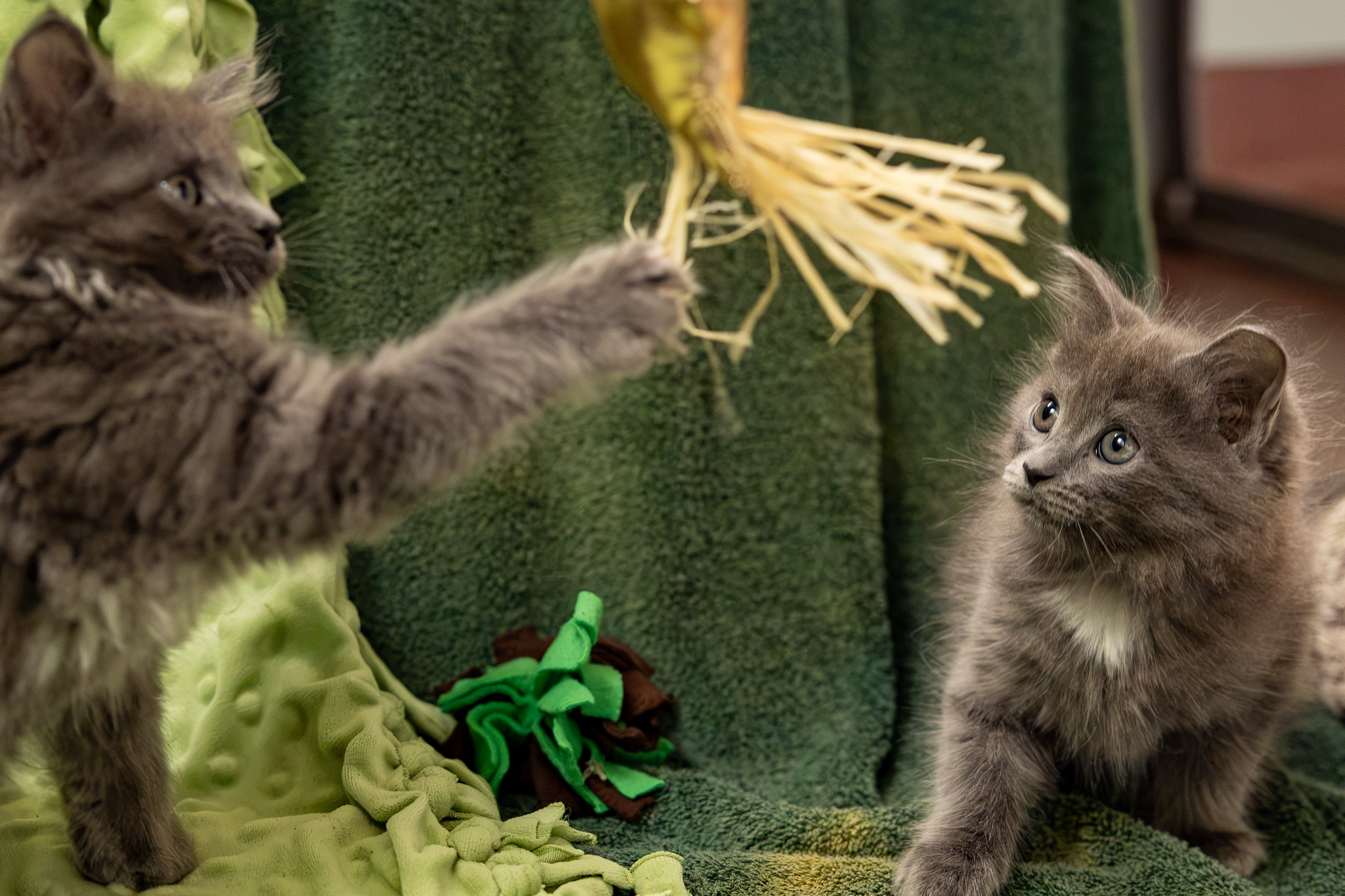
 Two puppies. Two kittens. Double the cuteness, double the fun—right? It’s easy to see why adopting littermates can be so appealing. They already know each other, they can play together, and they’ll never be lonely. What could go wrong?
While there is no scientific evidence that definitively proves or disproves what is commonly called “littermate syndrome,” there are legitimate behavioral and practical concerns to consider when bringing home two puppies from the same litter.
Kittens can also experience changes in their relationship as they mature, but feline littermates generally tend to be more adaptable to living together than canine littermates.
Most importantly, adopting siblings does not mean you can simply raise them together and expect everything to work itself out. Each animal still needs individual attention, training, socialization, and opportunities to develop independence.
The Benefits of Adopting Littermates
- Social learning: Young animals learn important social skills through appropriate interactions with other animals. Littermates can teach each other boundaries and provide opportunities for play and communication.
- Built-in companionship: Littermates can play together and provide companionship and an outlet for energy, especially when home alone.
However, these benefits should not be confused with a substitute for human interaction, training, or appropriate socialization. Two animals living together still need to learn how to function independently.
What to Consider Before Adopting Kittens Together
 Kittens do not stay kittens forever. As they mature, cats that once played beautifully together may begin competing for resources or space, or one cat may become more assertive than the other. Providing adequate resources throughout the home can help prevent competition and reduce the likelihood of conflict.
- Before bringing home two kittens, consider the long-term financial commitment. Everything you need will be doubled: veterinary care, food, litter, spay/neuter surgery, litter boxes, scratching posts, cat trees, and much more.
The Challenges of Raising Puppy Littermates
 Individual training and socialization can get lost in the chaos. Puppies require an enormous amount of individual attention during their first months of life, and two puppies means double the work. When you’re managing potty training, chewing, biting, crate training, household manners, exercise, enrichment, and socialization times two, it can be easy to focus on simply getting through the day.
Unfortunately, this can mean that important developmental experiences get overlooked. Each puppy needs opportunities to learn and practice skills independently—not just alongside their sibling.
- Puppies can become overly dependent on each other. One of the biggest concerns with littermates is co-dependency. Some puppies become so accustomed to having their sibling nearby that being separated becomes difficult. One puppy may cope well while the other becomes extremely distressed.
 Relationships between siblings can become complicated as they mature. Once puppies reach social and sexual maturity, play can become more intense, and disagreements may escalate into serious conflicts. If puppies spend most of their social time with each other, they may not develop adequate experience interacting appropriately with unfamiliar dogs and see them as intruders in their sibling relationship.
- Training can be harder when your puppy has a built-in distraction. Imagine trying to teach a puppy to pay attention to you while their favorite playmate is running around the room. Littermates naturally want to interact with each other, and that interaction can easily become more rewarding than anything you are offering. Individual training can help your puppy needs to learn that you are worth paying attention to—even when their sibling is right there.
- Each puppy needs to develop a relationship with people. Dogs need strong relationships with their human caregivers, but it is easy for two puppies to become more focused on each other. As a result, you should deliberately create opportunities for each puppy to build an individual relationship with you.
- Two puppies mean double the commitment. You’ll need to budget two sets of veterinary expenses, food, equipment, training, enrichment, and other ongoing costs. You will also need separate crates, beds, leashes, training classes, and other supplies.
Already Have Littermates? Don’t Panic.
If you’ve already brought home siblings, there is no reason to panic. The important thing is to be proactive rather than assuming they’ll be fine simply because they’re siblings.
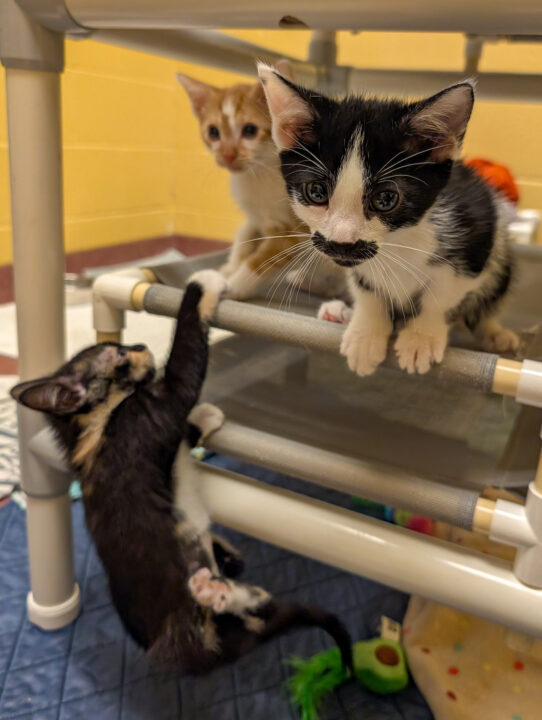
If You Have Kittens or Cats
- Provide plenty of resources. Multiple litter boxes, food and water stations, scratching surfaces, resting areas, elevated spaces and other resources spread throughout the house helps limits competition.
- Make individual time a priority. Spend time handling and interacting with each kitten separately. Learn their individual personalities, preferences, and communication styles.
- Give them space. Even cats that love each other need their space. Make sure each cat has places where they can retreat and relax without being bothered.
If You Have Puppies or Dogs
 Give them time apart every day and provide them with their own space. This is one of the most important things you can do. Walk, train, play and take them for outings separately so they learn being alone is normal and safe. Puppies should have separate crates and individual resting areas. Avoid routinely confining them together.
- Feed them separately. Use separate bowls and, when appropriate, separate feeding areas. This helps prevent competition and allows you to monitor each puppy’s eating habits.
- Treat them as individuals and build individual relationships. Your puppies may look alike, but they are not the same dog. They may have completely different personalities, energy levels, fears, motivations, and learning styles. Spend plenty of one-on-one time with each puppy to learn their specific personality and build an individual relationship.
- Socialize them individually. During the critical socialization period, puppies should be introduced to a wide variety of people, animals, environments, sounds, surfaces, and experiences. Whenever possible, give each puppy these experiences without their sibling present.
The goal isn’t to keep siblings apart all the time. The goal is to make sure they can function confidently both together and independently.
So, Should You Adopt Littermates?
There is no universal yes-or-no answer. For kittens, adopting siblings can be a wonderful choice, provided you are prepared to meet the needs of two individual cats. For puppies, the potential behavioral challenges make adopting littermates a decision that deserves much more careful consideration. Two animals can share a home without having to share every experience. In fact, giving them opportunities to be individuals may be one of the best things you can do for both of them.