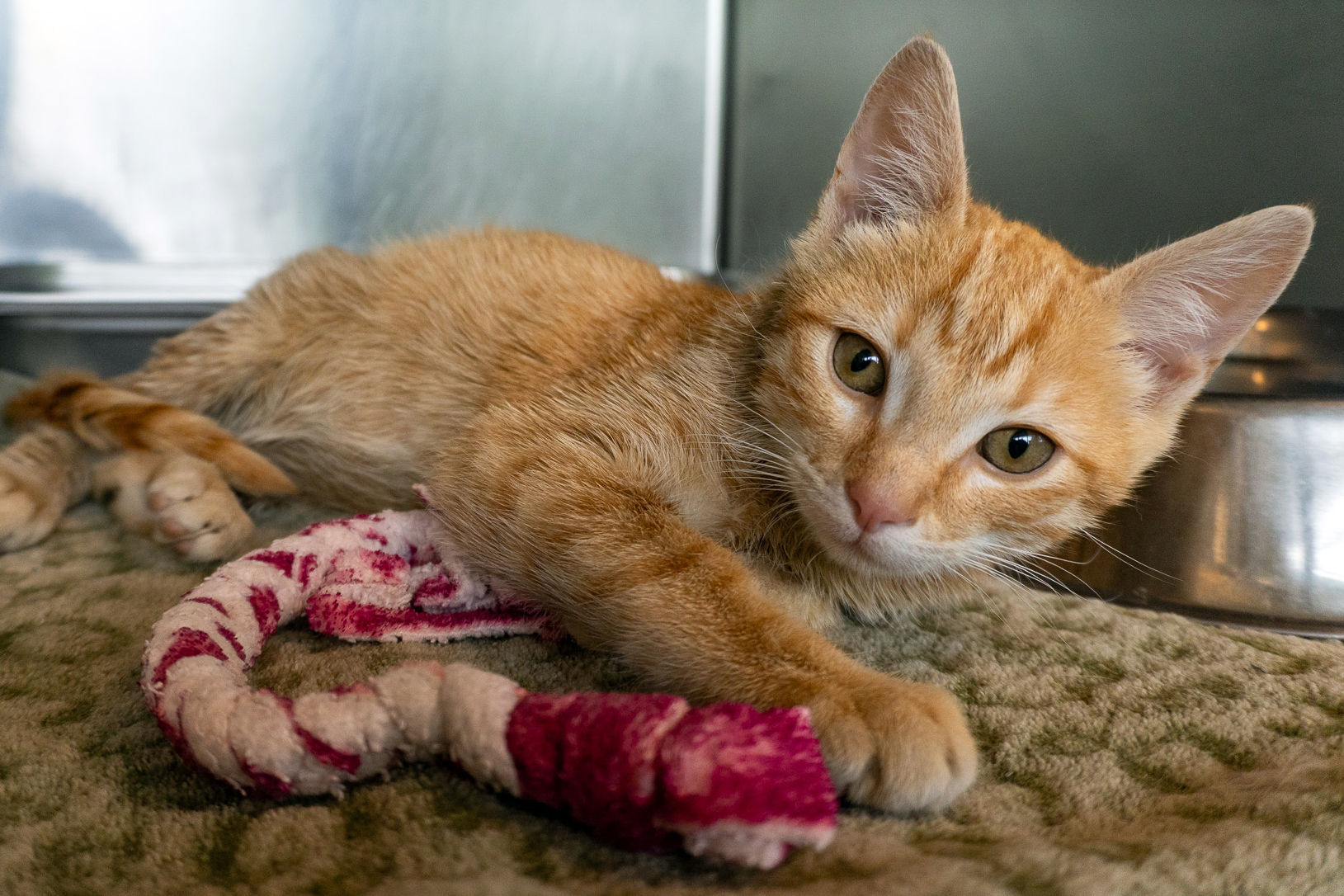
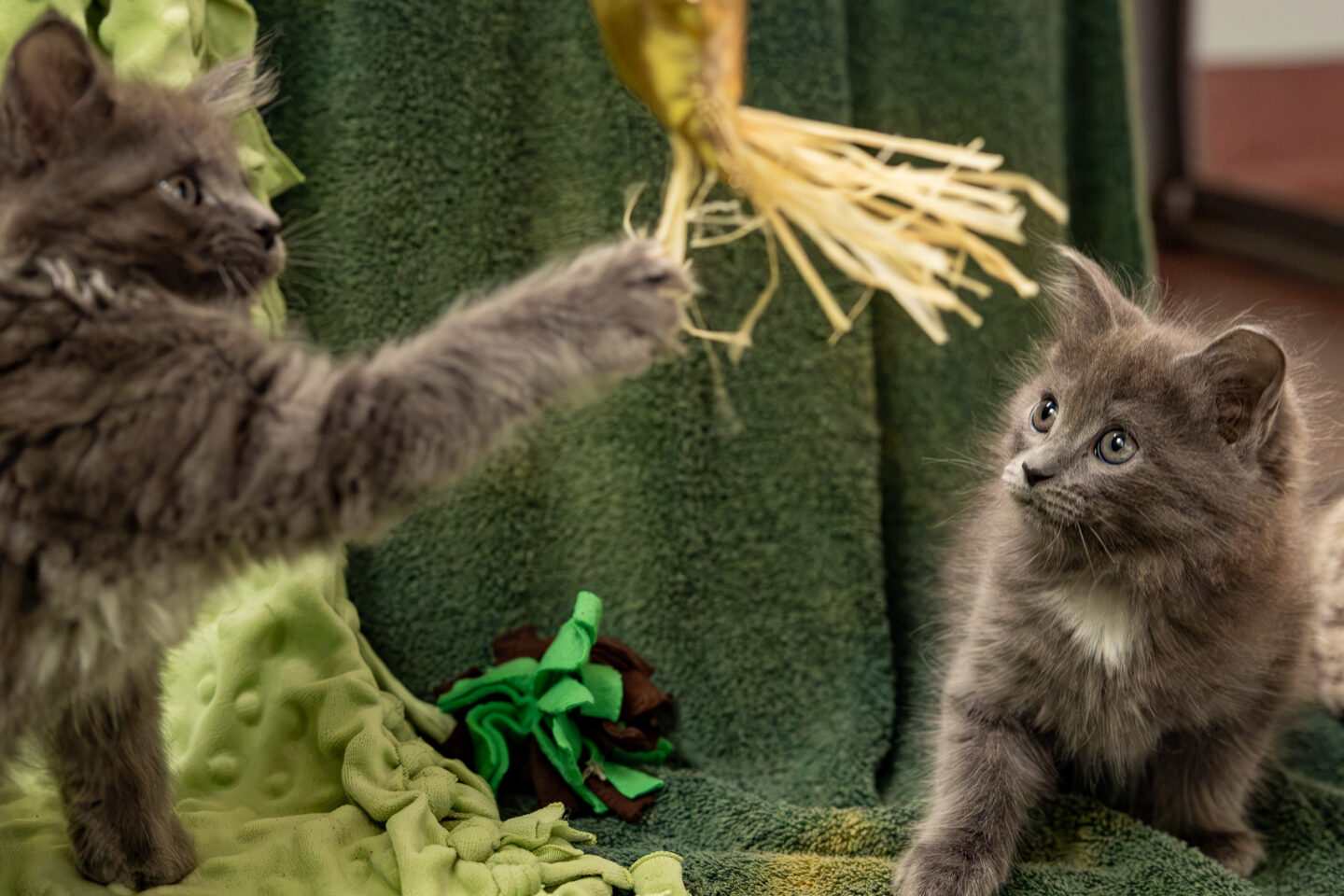
Our cats may spend their days curled up on the couch, watching birds through the window, or waiting for the sound of a can opening in the kitchen, but underneath that comfortable indoor lifestyle is still an animal driven by natural instincts.
Cats have an innate desire to climb, scratch, hide, hunt, observe, explore, and protect their territory. Living indoors doesn’t erase these tendencies, instead, our homes become the place where cats try to express these behaviors.
A cat scratching the side of the couch, climbing onto the kitchen cabinets, knocking things off a shelf, or racing through the house at night may seem like they’re simply causing trouble. Before labeling a cat as “bad” or destructive, it can be helpful to ask a different question: What is my cat trying to do?
Understanding the instinct behind a behavior can help us find ways to meet that need while creating a home that works better for both cats and cat owners.
Your Indoor Cat Is Still a Hunter
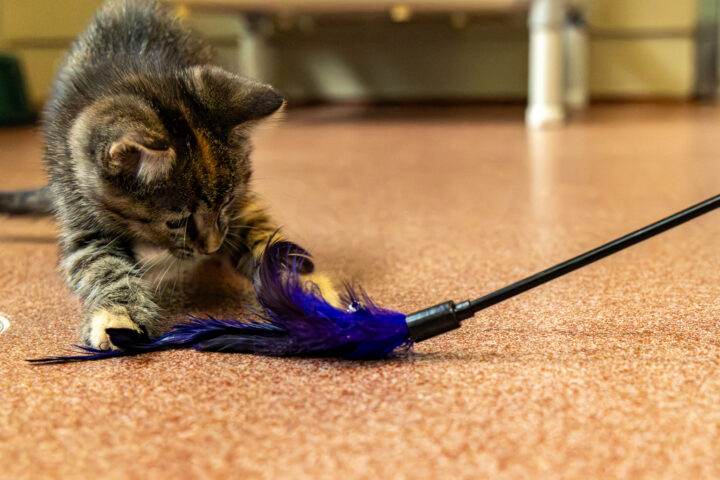
Even if your cat has never stepped foot in the wilderness, hunting behaviors like stalking, chasing, pouncing, and catching prey remain an important part of being a cat.
You may notice your cat crouching behind furniture before pouncing on a toy, intensely watching a bug, or suddenly sprinting across the house. Providing appropriate ways to practice these behaviors — interactive toys like wands or puzzle feeders that encourage them to “work” for food — can give cats an outlet for those instincts.
Why Your Cat Wants to Climb Everything
If you’ve ever found your cat sitting on top of a refrigerator, bookshelf, or kitchen cabinet, they probably didn’t choose that location just to make it difficult for you to get them down.
Height provides cats with something valuable: a safe place to observe approaching people, animals, and activity while maintaining some distance. Providing vertical territory like cat trees, sturdy shelving, and window perches is especially important in an indoor environment. In homes with multiple pets, these spaces can also give cats additional options when they want some distance.
Instead of constantly trying to keep a cat off elevated surfaces, try providing somewhere they’re allowed to climb.
Scratching Isn’t Bad Behavior
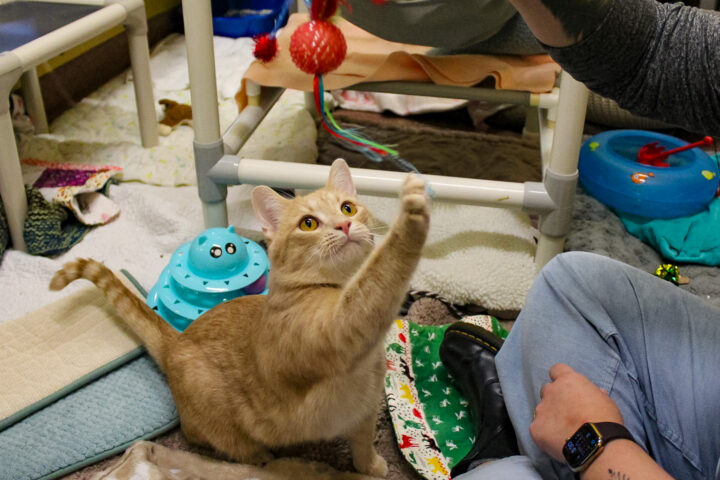 A shredded couch can certainly feel personal, but scratching is just another normal feline behavior.
Cats scratch for several reasons. It helps maintain their claws, allows them to stretch their bodies, and provides a way to leave visual and scent information within their environment.
The goal is to redirect their scratching away from the couch or other furniture to scratching posts or cardboard scratchers. Place the scratching surfaces in places your cat already spends time, or near furniture they consistently scratch.
Paying attention to where and how your cat prefers to scratch can help you find an alternative they’ll use.
Sometimes Your Cat Needs to Hide
Finding your cat underneath a bed or tucked into a box doesn’t necessarily mean something is wrong. Hiding can help them feel comfortable, safe, and give them control over how they want to interact with their environment.
Safe spaces can be surprisingly simple, any cat lover knows how they love to jump into a cardboard box! A covered cat bed, a carrier left open in the home, a cozy space underneath furniture, or an elevated perch with some concealment make great hideouts.
It’s important to respect these spaces. If a cat retreats somewhere safe, continually pulling them out or forcing interaction takes away the security that space provides.
Sometimes giving a cat the choice to retreat is exactly what helps them feel confident enough to come back out.
Why Is My Cat So Obsessed With What’s Outside?
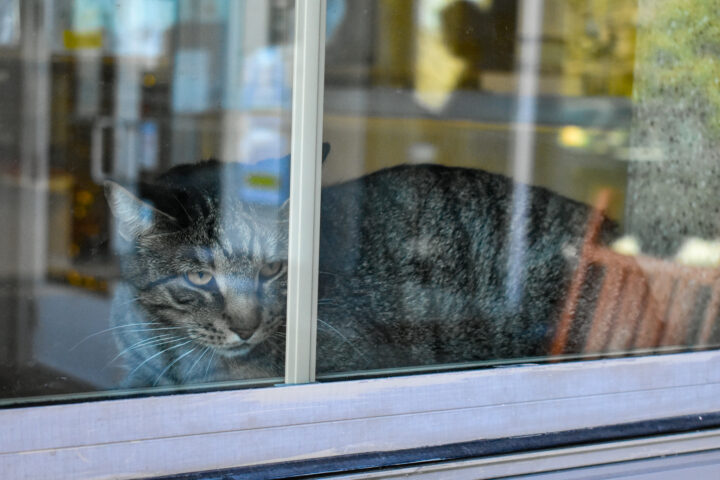 For an indoor cat, a window can be much more than a window, it’s a place to watch the comings and goings of the outdoors: birds, squirrels, leaves, insects, weather and sunlight.
Providing a comfortable window perch can be one of the simplest ways to add stimulation to an indoor cat’s day.
For some cats and households, supervised or protected outdoor experiences can provide even more opportunities for exploration. Depending on the individual cat, that might include harness and leash training or access to a secure outdoor enclosure such as a catio.
A catio allows cats to experience fresh air, sunshine, sights, sounds, and smells while remaining protected within an enclosed space. These spaces can also incorporate many of the things cats naturally seek out such as climbing areas, elevated perches, resting spots, and scratching surfaces.
The important distinction is that enrichment doesn’t require allowing a cat to roam freely outdoors. There are ways to bring elements of the outside world into a cat’s life while keeping safety at the center of the experience.
Look at the Behavior Before Trying to Stop It
One of the most useful things we can do as cat owners is become curious about our cats’ behavior.
Instead of, “How do I make my cat stop doing this?” try asking: “What need might my cat be trying to meet?” Do they need more places to climb and scratch? Would they like more opportunities to play and explore? Do they need somewhere quiet to feel safe?
Not every unwanted behavior can be solved with a cat tree or a new toy. Changes in behavior can also be associated with stress, pain, illness, or other medical concerns.
If your cat suddenly develops a new behavior, particularly changes involving appetite, litter box habits, aggression, vocalization, activity level, or withdrawal, it’s important to talk with your veterinarian. Ruling out a medical cause should come before assuming the behavior is purely environmental.
Creating a Life Where Your Cat Can Be a Cat
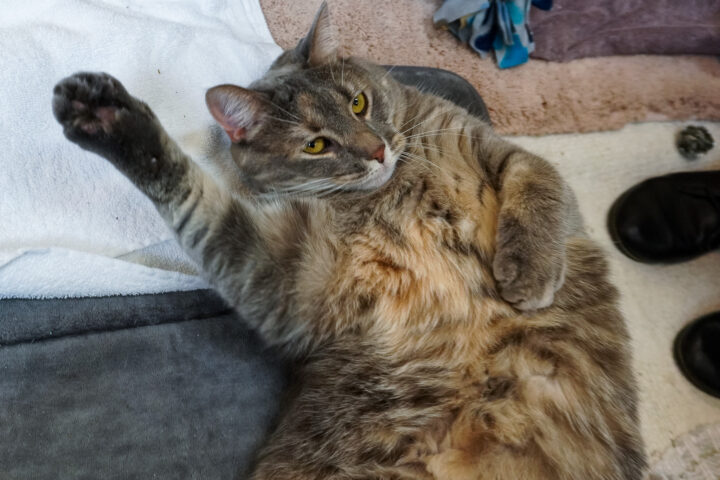 Keeping a cat indoors can protect them from many of the dangers they might encounter outside, but a safe life should also be an engaging one.
A cardboard box can become a hiding place. A window perch can become an observation tower. A scratching post can provide an appropriate outlet for marking and stretching. A few minutes with a wand toy can become a hunt. Secure outdoor spaces can introduce an entirely new world of sights, sounds, smells, and experiences.
When we understand the instinct behind the behavior, we can stop asking our cats to simply fit into our environment and start thinking about how their environment can better meet their needs.
Sometimes, your cat isn’t misbehaving, they’re simply asking for an opportunity to be a cat.