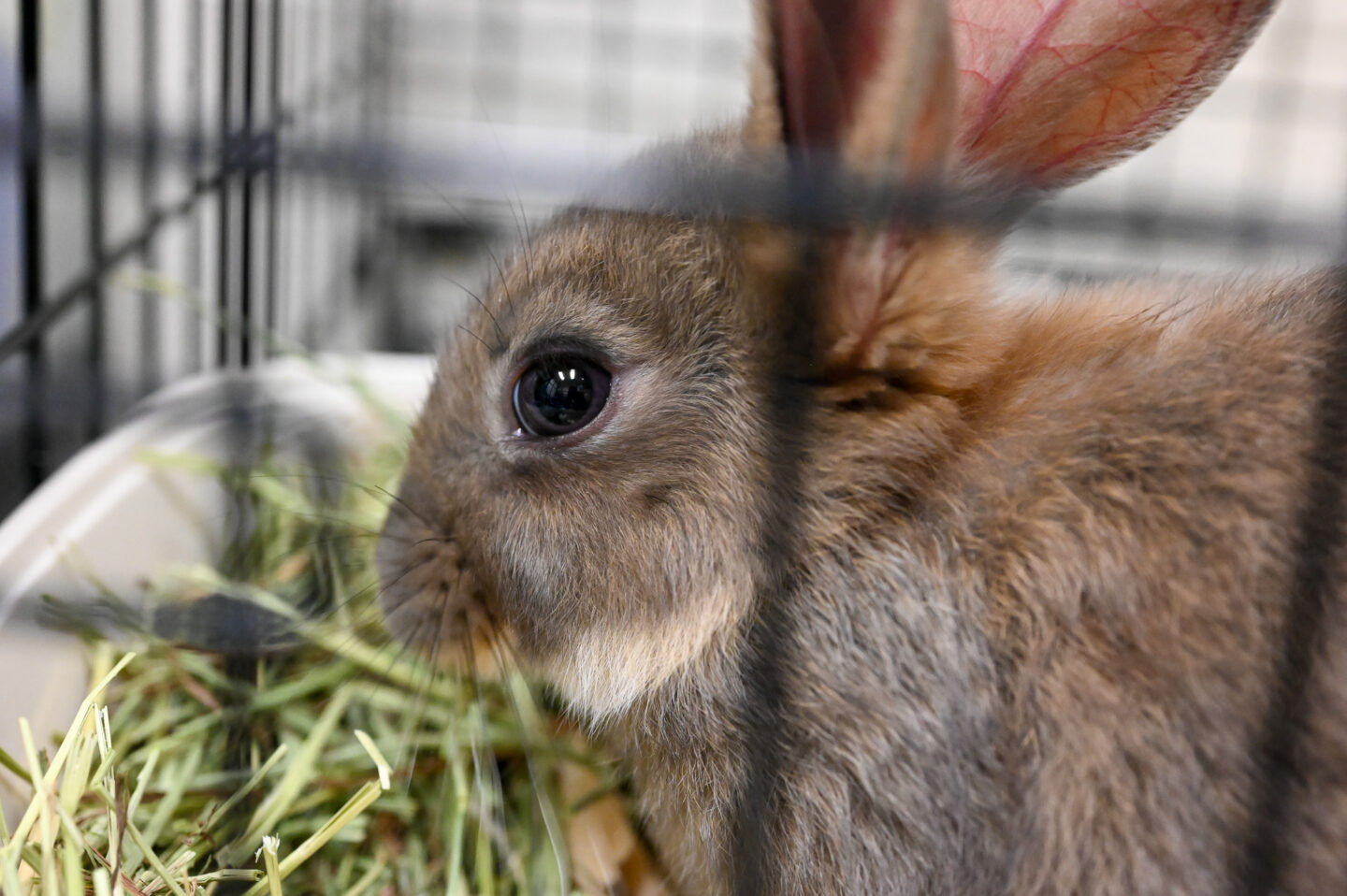
Have you been considering bringing a bunny home but aren’t sure what it will be like? Learn the basics of bunny care, with some insight from one of our fosters.
If you’d like to get some hands-on experience before taking the hop, become a Bunny Buddy volunteer or rabbit foster through Asheville Humane!
Bunny buddy for life
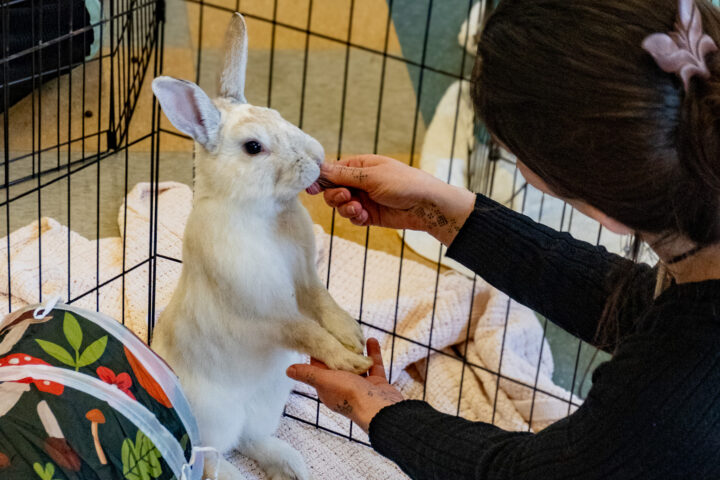 While they are small and quiet, bunnies are not necessarily starter pets. Domesticated rabbits typically live up to 8–12 years. They need daily care, a proper diet, potty training, and space to roam, play and socialize, just like any other pet.
“They need attention, care, and SPACE. They really thrive when they have room to move,” said a foster currently caring for a rabbit and her seven babies. “They can also be wildly destructive—baseboards, carpets—they can redecorate your home if you’re not prepared.”
Rabbits are the third-most abandoned pet, right behind cats and dogs. While we encourage you to consider adopting, make sure you are ready for the cost and commitment.
“For the right person, someone who wants to spend time, be present, and build trust, they’re a really special companion,” the foster said.
The Setup
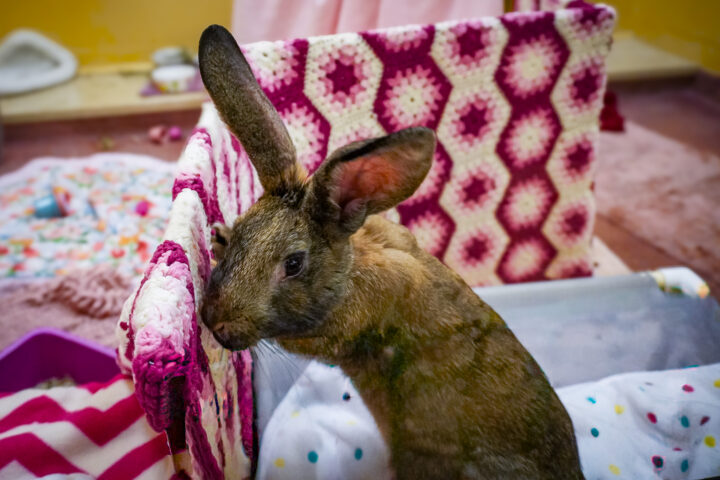 Bunnies are indoor pets. Keeping them inside protects them from predators, illnesses, inclement weather and gives them more opportunities to bond with you!
- Their habitat should be large enough for them to stand up on their hind legs without touching the top and allow at least three to four full hops (typically at least three feet) in each direction.
- They should have constant access to food and water.
- Provide at least one hideout, as they are still prey animals and need a place to feel safe.
- The habitat bottom should be solid because mesh or wire can hurt their feet.
- Use wood shavings (not pine or cedar), recycled paper bedding, or a thick blanket for bedding.
- Similar to cats, rabbits can be litter box trained! Set up a plastic litter pan and fill it with a few inches of rabbit-safe litter and a few handfuls of hay.
- Their space, including the litter box, needs to be cleaned daily. Luckily, most of the mess is dry and can be easily swept up.
Rabbit Food
They do eat carrots, but not as much as Bugs Bunny would have you believe. Their primary food is grass hay! They also love leafy greens, including carrot tops, but they should only have fruit and carrots as small treats.
Avoid alfalfa (too rich for adult rabbits) and iceberg lettuce (can cause stomach upset). They can have high-fiber rabbit pellets, but those should also be in limited amounts to avoid excessive weight gain.
What’s up, Doc?
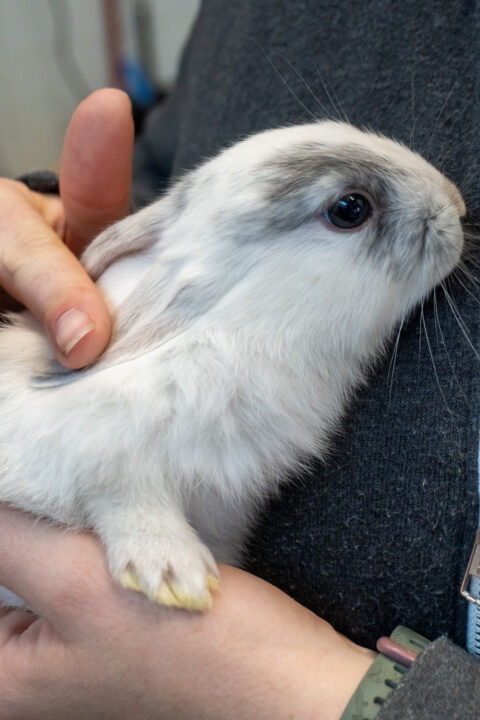 Rabbits need regular vet checkups like any other pet—however, not every vet specializes in rabbit care. You may need to find an exotic vet to take them to, so be sure to ask when making an appointment.
The phrase “multiplying like rabbits” is rooted in truth! Rabbits reach sexual maturity between three and six months of age and their gestational period is around a month. With three to eight kits a litter, that’s a lot of rabbits. Spay/neutering your bunny is crucial to preventing pet overpopulation. It helps with litterbox training and keeps them healthier too!
Some-bunny to love
Bunnies are smart and social with distinct personalities. You can keep them busy with puzzles, safe chew toys and hay towers. It is important to encourage natural behaviors like foraging and frequent chewing helps maintain their teeth.
They also do better with other rabbits, since they live in large groups in the wild. Consider adopting more than one so they’ll have company to eat, play and nap with. The more time you spend with your rabbit the more you’ll see their personality emerge, and understand what they like or don’t like.
“We’ve happily discovered that Gertrude plays, responds to little cues, and genuinely seems excited to see us when we come home,” said the foster. She would even play with the broom while they clean their space.
 Even though Gertrude’s babies were less than a month old, their personalities were already distinct. “We already know who’s who. Stripes is bold and social. He is first out, first to snacks, first to cuddles. Dumbo is huge, sweet, mellow, and obsessed with scratches, plus the biggest floppy ears.”
As you get to know them you’ll understand what handling they prefer. Most rabbits do not like to be picked up.
“They’re fragile. They’re prey animals at their core, so stress and handling really matter. We had to go slow, build trust, and give them space to feel safe,” said the foster. “Watching that shift happen is one of the most rewarding parts.”
Get down on their level by sitting or lying on the floor and letting them approach you. Once they feel comfortable around you, gently pet them. If you need to pick them up, always use two hands: one around their chest and one under their hind legs and hold them close to your chest.
Bunny Behavior
Bunny antics are the most fun part of adopting a rabbit! When bunnies are feeling excited, they’ll “binky” where they literally jump for joy.
“Kind of like those little surprise pop up toys I used to play with as a kid,” the foster said. “It’s like they haven’t quite figured out how their legs work yet, or that they are built spring-loaded.”
They’ll flop into a sploot when happy and lick or chin (bonking you with their head) to show affection.
“Rabbits are genuinely hilarious. Between the flops, the zoomies, the bowl throwing, and the tiny baby parkour attempts, it’s just constant entertainment.”
See our available bunnies here!