Every spring and summer, Asheville Humane Society fills with kittens who are too young to survive without help. Some still have their eyes closed, and none of them can eat on their own, stay warm, or go to the bathroom without either their mom or humans. Unlike older kittens or adult cats, they can’t be cared for in a shelter setting. They need homes and people like you!
So, what does fostering a bottle baby actually look like?
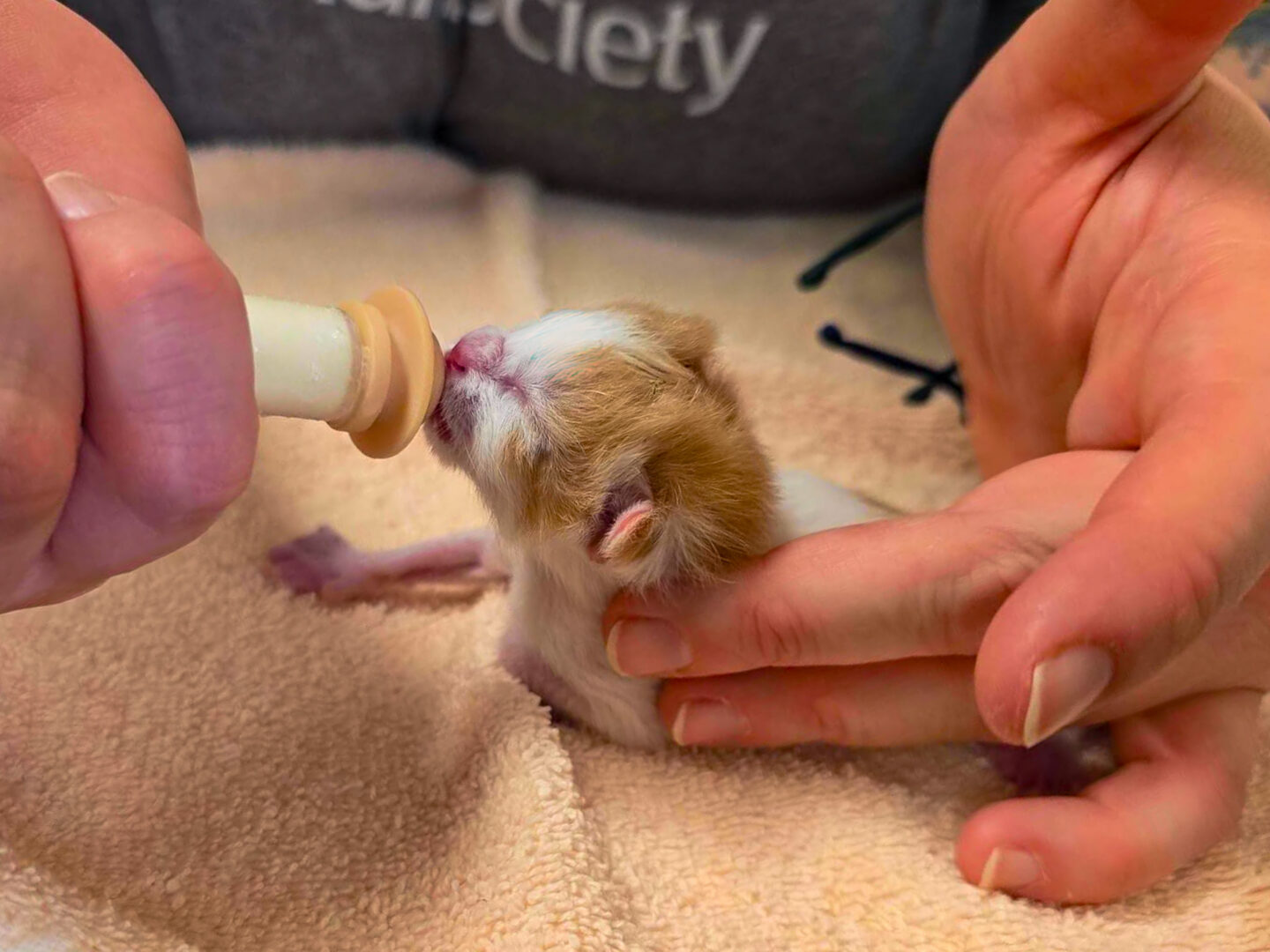
It is very hands-on, especially at the beginning. You’ll be feeding every few hours, including overnight at first, keeping them consistently warm, helping them go to the bathroom, and tracking their weight each day to make sure they’re growing.
That may seem like a lot when you first start, and honestly, it can be.
But here’s the part people don’t always expect: it gets easier, quickly!
What is a bottle baby?
Within a few days or a week, feedings start to space out, routines settle in, and you begin to feel more confident. What feels intimidating at first becomes second nature faster than most people think.
You might have heard that kittens need to be fed every two hours—but for healthy, stable kittens, that’s actually a myth.
Most neonatal kittens do great on a 3 to 4 hour feeding schedule, especially with proper support and monitoring!
Here’s what the timeline typically looks like:
- 0–4 weeks: feeding every few hours, including overnight (however, kittens usually sleep longer overnight when the world is quiet, just like human babies!)
- Around 3-4 weeks: starting to wean, often down to just one overnight feeding
- Around 5 weeks: can make it through the night, feed right before bed and first thing in the morning, with a few daytime check-ins
- 6+ weeks: if they’re healthy, things get much easier! At this age we’re eating dry and canned food on our own and becoming big, strong, playful kittens.
What if I don’t know how to bottle feed?
We will teach you! Here is a video to get you started on the basics and when you pick up your foster for the first time our team will provide hands-on training, no experience required.
You also don’t have to be an expert to foster any age of kittens!
We’ll show you how to bottle feed, walk you through what’s normal and what’s not, answer any questions and be here to support you along the way! You don’t need any prior knowledge, and you are not figuring it out alone. We even have 24/7 support for emergencies.
Asheville Humane Society’s foster team will provide everything you need every step of the way. That includes formula, bottles, and a full setup, along with training, ongoing guidance, and access to our medical team whenever you need it! If something feels off, you think of a question, or are having any struggles at all — you can reach out and we will help.
You don’t need much space to be able to foster neonates!
Neonates under 3 weeks old live in a small space — a cat carrier where they’re right near their heat source (a microwavable disc). They only come out for you to feed and potty them!
Once they’re 3.5 weeks and older, if they’re healthy, they can be housed in a 3-foot diameter playpen that we will provide. Around 3.5-4 weeks old, they’ll start to use a litterbox, move around more, and even play!
The Honest Truth
Fostering neonates can be tough. They are fragile and can be prone to illness. While care isn’t complicated, it needs to be consistent and attentive, especially early on.
But it is also one of the most incredible forms of fostering! Watching a tiny, needy kitten grow into a healthy, playful, adoptable pet is one of the most rewarding things you can be part of. You get to be a lifeline during those earliest, most important weeks.
If you’ve been thinking about fostering but weren’t sure if you could handle bottle babies, we would love to have you help! You can truly make a life-saving difference—even taking on just one litter can change everything for them.
Want to learn more about bottle babies? Check out this training from our friends at National Kitten College, some of the nation’s leading experts in neonatal kitten care.